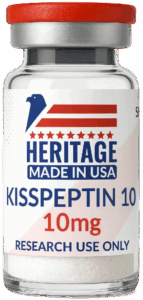

Third-Party Tested Peptides: How Independent Lab Testing Works
What "Third-Party Tested" Means
A third-party tested peptide has been analyzed by an independent laboratory that has no stake in selling it. The seller sends a sample, the lab runs its own methods, and the lab issues a Certificate of Analysis (COA) under its own name, address and signature.
The independence is the point. A purity number printed by the seller is a claim. A purity number on a certificate from an outside lab, one you can contact and verify, is evidence. Heritage Labs research compounds are third-party tested by independent U.S. laboratories, and the certificates are published in our COA Portal.
What an Independent Lab Checks
A peptide COA answers three separate questions. A good certificate answers all three, not just the first.
| Test | The question it answers | What you see on the COA |
|---|---|---|
| Purity (HPLC) | How much of the peptide material in the sample is the target peptide? | A percentage, with a chromatogram showing one dominant peak |
| Identity | Is it actually the peptide on the label? | "Confirmed", by comparison with a reference standard or by mass spectrometry |
| Net peptide content | How many milligrams of peptide are in the vial? | A measured amount in mg, to compare with the labeled amount |
Purity and content are different numbers. A vial can be 99% pure and still hold less peptide than its label says, which is why net content matters as much as the purity percentage. Our guide to HPLC purity testing explains how the purity number is produced.
The Labs That Test Heritage Labs Peptides
Most Heritage Labs testing is now done by ILS Laboratories in San Diego, California, an ISO/IEC 17025 accredited analytical lab. ISO/IEC 17025 is the international standard for the competence of testing laboratories.
Each ILS certificate reports:
- Peptide purity by HPLC, measured by reversed-phase HPLC at 214 nm, with the chromatogram printed on the certificate
- Identity, confirmed by matching the sample's HPLC retention time to a reference standard
- Net peptide content in milligrams
- The lot number, the dates the sample was received and analyzed, and the lab director's signature
- A verification code and QR code you can check on the lab's own website
Older certificates in our portal come from two other independent U.S. labs: Freedom Diagnostics Testing, whose reports confirm identity by LC-MS (mass spectrometry), and Vanguard Laboratory in Olympia, Washington, which is A2LA accredited.
Recent Results
These are recent ILS Laboratories results for Heritage Labs products, exactly as reported on the certificates:
| Product | Lot | HPLC purity | Net content | Identity |
|---|---|---|---|---|
| BPC-157 5mg | BC5-260406-A | 99.93% | 5.26 mg | Confirmed |
| CJC-1295 with DAC 5mg | CD5-260421-H | 99.78% | 5.35 mg | Confirmed |
| Kisspeptin-10 10mg | KS10-260506-J | 99.44% | 10.26 mg | Confirmed |
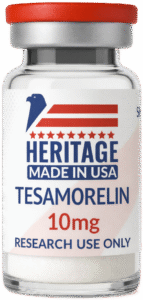
| Tesamorelin 5mg | TSM5-260526-J | 99.42% | 5.21 mg | Confirmed |
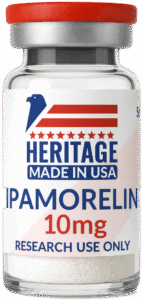
| Ipamorelin 5mg | IP5-260421-H | 99.26% | 5.22 mg | Confirmed |
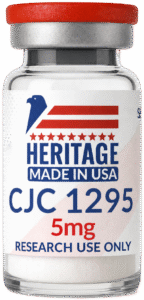
| CJC-1295 5mg | CND5-260507-H | 99.17% | 5.26 mg | Confirmed |
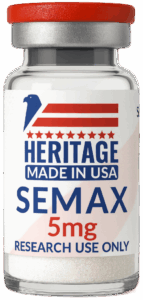
| Semax 10mg | XA10-260427-H | 99.14% | 10.18 mg | Confirmed |
| DSIP 5mg | DS5-260506-J | 98.53% | 5.06 mg | Confirmed |
Each certificate in this table can be opened from its product page or from the COA Portal.
How to Verify a Peptide COA
A certificate is only useful if you can trust it came from the lab. Run through these checks on any COA, from any supplier:
- The lab is named. Look for a lab name, street address and contact details, not just the seller's logo.
- The product and amount match. A 5 mg certificate does not cover a 10 mg vial.
- The lot number matches. A certificate reports results for one lot. Compare its lot number with the lot on your product.
- There is a chromatogram. A purity percentage with no chromatogram and no method gives you nothing to check.
- Identity was tested. Purity alone does not prove the peptide is the right one. Look for identity confirmed against a reference standard or by mass spectrometry.
- The dates make sense. The certificate shows when the lab received and analyzed the sample.
- The lab confirms it. Use the verification code or report ID on the certificate with the lab itself.
For a section-by-section walkthrough of a certificate, see How to Read a Certificate of Analysis.
Red Flags in Peptide Testing Claims
- "Lab tested" or "third-party tested" claims with no certificate you can open
- A certificate with no lab name, address or contact details
- The same certificate shown for different products or different vial sizes
- A purity figure with no chromatogram and no stated method
- No lot number, or a lot number that does not match the product
- A report the lab cannot confirm when you contact it
Third-Party Testing vs In-House Testing
| Third-party testing | In-house testing | |
|---|---|---|
| Who runs the test | An independent laboratory | The seller or manufacturer |
| Conflict of interest | None: the lab does not sell the product | The tester profits from a good result |
| Can you verify it? | Yes, with the lab, using the report code | Only by trusting the seller |
| Accreditation | Labs can hold ISO/IEC 17025 accreditation | Usually none |
Frequently Asked Questions
What does third-party tested mean for peptides?
It means an independent laboratory, not the seller, analyzed a sample of the peptide and issued a Certificate of Analysis under its own name. The certificate typically reports purity by HPLC, confirms identity, and measures net peptide content.
Are Heritage Labs peptides third-party tested?
Yes. Heritage Labs research compounds are third-party tested by independent U.S. laboratories, most often ILS Laboratories in San Diego, an ISO/IEC 17025 accredited lab. Certificates are published in our COA Portal as they are issued.
Which lab tests Heritage Labs peptides?
Most current testing is done by ILS Laboratories in San Diego, California. Older certificates in our portal come from Freedom Diagnostics Testing and Vanguard Laboratory in Olympia, Washington.
What purity should a research peptide have?
Research-grade peptides are commonly specified at 98% purity or higher by HPLC. The recent Heritage Labs results shown on this page range from 98.53% to 99.93%.
What is the difference between HPLC and mass spectrometry?
HPLC separates the components of a sample and measures how much of it is the target peptide, which gives the purity percentage. Mass spectrometry measures the molecular mass of what is in the sample, which confirms the peptide's identity. Purity tells you how clean the sample is; identity tells you it is the right compound.
How do I verify a Heritage Labs COA?
ILS Laboratories certificates carry a QR code and an access code you can check on the lab's website. Freedom Diagnostics certificates carry a search code you can look up at FreedomDiagnosticsTesting.com. Vanguard Laboratory reports carry a laboratory ID you can confirm with the lab directly.
What does the lot number on a COA mean?
A certificate reports results for the sample the lab tested, identified by its lot number. Compare the lot number on the certificate with the lot on your product.
Where can I find Heritage Labs certificates?
In our COA Portal, and on the product page of each product that has a certificate.
For laboratory research use only. Not for human or veterinary use.