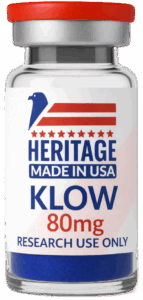
KLOW Peptide Blend Guide
What Is KLOW?
KLOW is a research blend of four peptides co-lyophilized in a single 80 mg vial: GHK-Cu (50 mg), BPC-157 (10 mg), TB-500 (10 mg) and KPV (10 mg). Each ingredient has its own body of published laboratory research, and each targets a different signaling pathway, which is why the four are combined for multi-pathway studies.
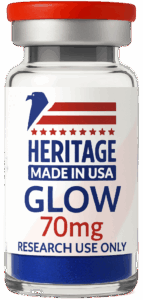
KLOW builds on the three-peptide Glow 50/10/10 blend (GHK-Cu, BPC-157 and TB-500) by adding KPV, a tripeptide studied in inflammation-pathway research. Heritage Labs sells KLOW 80mg for laboratory research use only.
What Is in the Vial
| Ingredient | Amount | What it is | Main research focus |
|---|---|---|---|
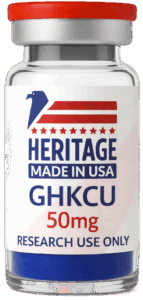
| GHK-Cu | 50 mg | Copper tripeptide-1: Gly-His-Lys bound to a copper(II) ion | Extracellular-matrix remodeling, copper-dependent enzymes, gene-expression studies |
| BPC-157 | 10 mg | 15-amino-acid pentadecapeptide derived from a protein in human gastric juice | Connective-tissue, angiogenesis and gastrointestinal models |
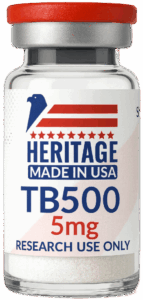
| TB-500 | 10 mg | Synthetic thymosin beta-4 peptide with the LKKTETQ actin-binding motif | Actin regulation, cell migration, tissue-repair models |
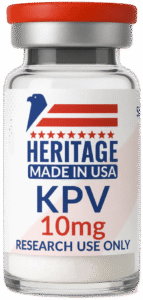
| KPV | 10 mg | Lys-Pro-Val, the C-terminal tripeptide of alpha-MSH | NF-κB signaling and inflammation models |
Total peptide content is 80 mg per vial, supplied as a co-lyophilized (freeze-dried) powder.
Why These Four Peptides Are Combined
Tissue repair is not a single event. In laboratory models it happens in overlapping stages: an inflammatory signal, new blood-vessel growth, cells moving into the area, and rebuilding of the structural matrix. Each KLOW ingredient has been studied at a different one of those stages:
| Repair stage studied | Ingredient | Research focus |
|---|---|---|
| The inflammation signal | KPV | NF-κB signaling and inflammatory markers |
| New blood vessels and tissue protection | BPC-157 | Angiogenesis and cytoprotection |
| Cells moving into the area | TB-500 | Actin regulation and cell migration |
| Rebuilding the structure | GHK-Cu | Collagen and extracellular-matrix remodeling |
Putting all four in one vial lets a researcher look at the whole sequence in a single preparation instead of one pathway at a time. KLOW is the three-peptide Glow blend plus KPV, which adds the inflammation-signaling piece that Glow does not cover.
We have not found a published origin for the KLOW formulation or a peer-reviewed study of the four-peptide combination itself; the research behind it is the research on each ingredient, summarized below.
What Research Has Studied
Published research covers each ingredient individually. We are not aware of peer-reviewed studies of the four-peptide KLOW combination itself, so the summaries below describe each component on its own.
GHK-Cu
GHK-Cu is a naturally occurring copper-peptide complex first identified in human plasma. Reviews of its research describe effects on extracellular-matrix synthesis and remodeling in laboratory models, and gene-expression analyses showing it is associated with changes in the activity of a large number of human genes.[1]
BPC-157
BPC-157 (Body Protection Compound-157) is a stable 15-amino-acid peptide. Its research has focused on cytoprotection, blood-vessel formation (angiogenesis) and healing in gastrointestinal, tendon, ligament, muscle and bone models, mostly in animals.[2][3]
TB-500
TB-500 is a synthetic form of thymosin beta-4, a peptide found in nearly every mammalian cell. Thymosin beta-4 binds actin through its LKKTETQ motif and has been studied for its role in cell migration, wound repair and tissue regeneration.[4]
KPV
KPV is the three-amino-acid C-terminal fragment of alpha-melanocyte-stimulating hormone. In mouse colitis models, KPV was taken up by the intestinal transporter PepT1 and reduced markers of intestinal inflammation.[5]
KLOW vs Glow
| KLOW | Glow 50/10/10 | |
|---|---|---|
| Ingredients | GHK-Cu, BPC-157, TB-500, KPV | GHK-Cu, BPC-157, TB-500 |
| Amounts | 50 / 10 / 10 / 10 mg | 50 / 10 / 10 mg |
| Total per vial | 80 mg | 70 mg |
| Difference | KLOW adds 10 mg of KPV, a peptide studied for reducing inflammatory signaling (see below). | |
What KPV Adds
Glow's three peptides are studied mainly for the rebuilding side of repair: new blood-vessel growth (BPC-157), cell migration (TB-500) and matrix remodeling (GHK-Cu). KPV brings in a peptide studied specifically for turning inflammatory signaling down.
KPV is the last three amino acids (Lys-Pro-Val) of alpha-melanocyte-stimulating hormone (alpha-MSH), a hormone studied for its anti-inflammatory activity. KPV keeps that activity in a much smaller molecule. In a 2008 study:[5]
- At nanomolar concentrations, KPV blocked activation of the NF-κB and MAP kinase inflammatory pathways in human intestinal and immune cells, and reduced the release of pro-inflammatory cytokines.
- KPV entered those cells through PepT1, a peptide transporter in the intestinal lining.
- In two mouse models of colitis, KPV given in drinking water reduced inflammation.
So KLOW pairs Glow's repair-focused trio with an ingredient studied for calming the inflammatory signal, which lets researchers look at both sides of the process in one preparation.
How to Reconstitute KLOW
Add bacteriostatic water slowly down the inside wall of the vial, then swirl gently until the powder dissolves; do not shake. If the solution stays cloudy or does not fully dissolve, use the two-step method in Acetic Acid Water vs BAC Water.
| Water added | Total peptide concentration | GHK-Cu | BPC-157, TB-500, KPV (each) |
|---|---|---|---|
| 2 mL | 40 mg/mL | 25 mg/mL | 5 mg/mL |
| 3 mL | 26.67 mg/mL | 16.67 mg/mL | 3.33 mg/mL |
| 5 mL | 16 mg/mL | 10 mg/mL | 2 mg/mL |
For any other volume, use the reconstitution calculator.
Storage
- Lyophilized (unopened): store sealed at −20°C for long-term stability.
- Reconstituted: store at 2–8°C and use within 30 days.
- Keep vials out of light, and use a new sterile needle for every draw.
More detail is in Peptide Storage & Handling.
Frequently Asked Questions
What is KLOW peptide?
KLOW is a research blend of four peptides in one 80 mg vial: GHK-Cu (50 mg), BPC-157 (10 mg), TB-500 (10 mg) and KPV (10 mg). It is sold for laboratory research use only.
What is in the KLOW blend?
GHK-Cu 50 mg, BPC-157 10 mg, TB-500 10 mg and KPV 10 mg, co-lyophilized in a single vial for a total of 80 mg.
Why are these four peptides combined in KLOW?
Each ingredient has been studied at a different stage of tissue repair in laboratory models: KPV in the inflammation signal, BPC-157 in new blood-vessel growth, TB-500 in cell migration and GHK-Cu in rebuilding the extracellular matrix. Combining them lets researchers study those stages together in one preparation.
What is the difference between KLOW and Glow?
Glow contains GHK-Cu, BPC-157 and TB-500 (50/10/10 mg, 70 mg total). KLOW adds 10 mg of KPV (80 mg total), a fragment of alpha-MSH that in laboratory studies blocked NF-κB inflammatory signaling and reduced inflammatory cytokines. Glow covers blood-vessel growth, cell migration and matrix remodeling; KPV adds the inflammation-signaling side.
What does research say about KLOW?
Published research covers each ingredient on its own: GHK-Cu in extracellular-matrix and gene-expression studies, BPC-157 in tissue and gastrointestinal models, TB-500 (thymosin beta-4) in cell migration and repair, and KPV in inflammation models. We are not aware of peer-reviewed studies of the four-peptide combination itself.
How do you reconstitute KLOW?
Add bacteriostatic water slowly down the inside of the vial and swirl gently until dissolved. In 2 mL, total peptide concentration is 40 mg/mL (GHK-Cu 25 mg/mL; BPC-157, TB-500 and KPV 5 mg/mL each).
How should KLOW be stored?
Store sealed vials at −20°C. After reconstitution, refrigerate at 2–8°C and use within 30 days.
Where can I buy KLOW for research?
Heritage Labs USA sells KLOW 80mg. We are veteran-owned and ship from the United States; weekday orders placed before 12:00 PM ET ship the same day.
References
- Pickart L, Margolina A. Regenerative and Protective Actions of the GHK-Cu Peptide in the Light of the New Gene Data. Int J Mol Sci. 2018;19(7):1987. PubMed
- Sikiric P, et al. Novel Cytoprotective Mediator, Stable Gastric Pentadecapeptide BPC 157. Vascular Recruitment and Gastrointestinal Tract Healing. Curr Pharm Des. 2018;24(18):1990-2001. PubMed
- Seiwerth S, et al. BPC 157 and Standard Angiogenic Growth Factors. Gastrointestinal Tract Healing, Lessons from Tendon, Ligament, Muscle and Bone Healing. Curr Pharm Des. 2018;24(18):1972-1989. PubMed
- Goldstein AL, Hannappel E, Sosne G, Kleinman HK. Thymosin β4: a multi-functional regenerative peptide. Basic properties and clinical applications. Expert Opin Biol Ther. 2012;12(1):37-51. PubMed
- Dalmasso G, et al. PepT1-mediated tripeptide KPV uptake reduces intestinal inflammation. Gastroenterology. 2008;134(1):166-178. PubMed
For laboratory research use only. Not for human or veterinary use.