

Acetic Acid Water 3ml
Sterile 0.6% glacial acetic acid solution in purified, non-pyrogenic water Required for reconstitution of acid-soluble peptides with limited neutral-pH solubility 3ml sterile vial For laboratory research use only
For laboratory research use only. Not for human or veterinary consumption. SKU AA.
Product details.
When Acetic Acid Water Is Required
Most research peptides dissolve readily in bacteriostatic water at near-neutral pH. A subset of peptides, however, have amino acid sequences that make them hydrophobic or prone to aggregation at neutral pH. These peptides may appear to dissolve initially in BAC water, only to form a cloudy suspension or visible precipitate within minutes to hours. This is not a sign of poor peptide quality — it is a solubility issue determined by the peptide’s primary sequence and isoelectric point. Peptides that are rich in hydrophobic amino acids (leucine, isoleucine, valine, phenylalanine) or that have an isoelectric point near neutral pH are the most common candidates for acetic acid reconstitution. The product page specifies the recommended reconstitution solvent. When acetic acid water is listed, it should be used exclusively — do not substitute bacteriostatic water, as incomplete dissolution will lead to inaccurate measurements and unreliable research results.
Composition and Specifications
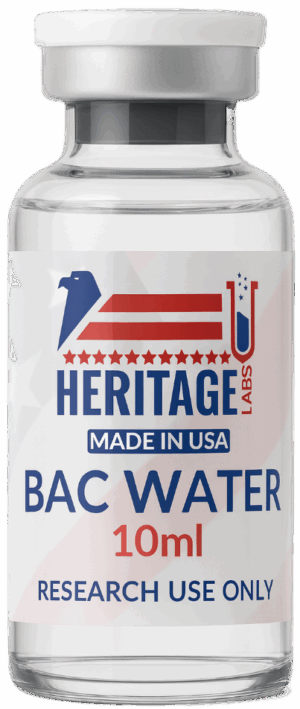
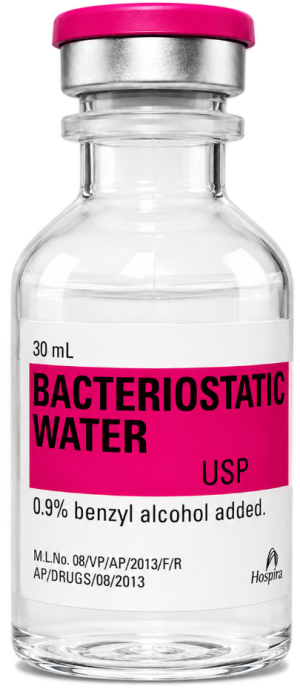
The formulation contains exactly two components: sterile water for injection and 0.6% glacial acetic acid. The solution is clear, colorless, and sterile. It is packaged in a 3 mL glass vial with a rubber stopper and aluminum crimp seal, identical in form factor to the bacteriostatic water vials, ensuring compatibility with standard syringe-based reconstitution workflows. Unlike bacteriostatic water, acetic acid water does not contain benzyl alcohol or any other antimicrobial preservative. The low pH provides some inherent inhibition of bacterial growth, but this is not equivalent to the dedicated preservative action of benzyl alcohol. For this reason, reconstituted peptides using acetic acid water have a shorter usable window than those reconstituted with bacteriostatic water.
Reconstitution Protocol
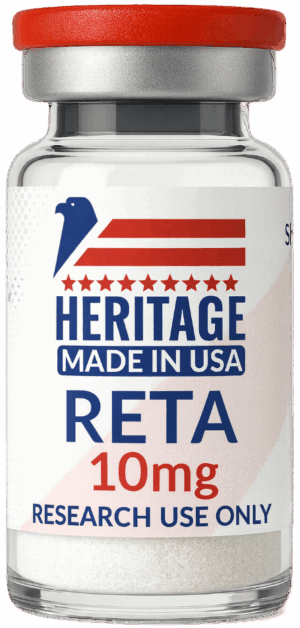
The reconstitution procedure for acetic acid water is identical to the standard peptide reconstitution protocol. Allow the peptide vial to reach room temperature. Swab both the peptide vial stopper and the acetic acid water vial stopper with 70% isopropyl alcohol. Draw the desired volume using a sterile insulin syringe. Inject the solvent slowly along the inside wall of the peptide vial — never directly onto the lyophilized powder. Swirl gently until the peptide dissolves completely. The solution should be clear. For a complete step-by-step protocol, see the Heritage Labs Reconstitution Guide. When reconstituting with acetic acid water, dissolution may be noticeably faster than with neutral-pH solvents. The acidic environment rapidly protonates the peptide, reducing intermolecular interactions that cause aggregation. If the peptide does not dissolve within 2-3 minutes of gentle swirling, continue for up to 5 minutes before concluding that an alternative approach is needed.
Storage After Reconstitution
Because acetic acid water contains no antimicrobial preservative, reconstituted peptide solutions should be stored refrigerated at 2-8°C and used within 48-72 hours. If the full volume will not be consumed within this window, divide the solution into single-use aliquots immediately after reconstitution and freeze at -20°C. Frozen aliquots should be used within 30 days and never refrozen after thawing. Store the unopened acetic acid water vial at controlled room temperature (20-25°C), away from direct light. Do not freeze. Once the vial stopper has been punctured, refrigerate and use within 14 days, swabbing the stopper with alcohol before each draw.
Quality Verification
Vials undergo visual inspection for particulates and container integrity. We do not COA-test water: a Certificate of Analysis covers our research peptides, not bacteriostatic water, acetic acid, or reconstitution solutions.
Choosing Between Solvents
The decision between bacteriostatic water and acetic acid water is determined by the peptide, not by preference. Bacteriostatic water is the default for the majority of research peptides and offers the advantage of multi-use use over 28 days. Acetic acid water is reserved for specific compounds that require acidic conditions for solubility. Using acetic acid water when it is not needed offers no advantage — the lack of preservative actually shortens the reconstituted shelf life. Always consult the product-specific documentation before reconstituting. Heritage Labs provides solvent recommendations on each product page. Both bacteriostatic water and acetic acid water are available in the Heritage Labs shop, along with the full catalog of research peptides.

FDA Disclaimer. All products are for research use only (RUO) as defined by the FDA — not for diagnostic, human, or veterinary use. These products have not been evaluated and have not been approved by the U.S. Food and Drug Administration and are not intended to diagnose, treat, cure, or prevent any disease.
Heritage Labs is a chemical supplier providing products strictly for laboratory research, analytical, and in-vitro purposes; it is not a compounding pharmacy or compounding facility under Section 503A, nor an outsourcing facility under Section 503B, of the Federal Food, Drug, and Cosmetic Act.