

Reconstitution Solution 3ml
Sterile, non-pyrogenic water with 0.9% benzyl alcohol preservative Compact 3ml vial — sized for individual peptide reconstitution pH 4.5-7.0 For laboratory research use only
For laboratory research use only. Not for human or veterinary consumption. SKU WA3.
Product details.
Why Reconstitution Solution Matters for Peptide Research
Lyophilized peptides must be dissolved in a liquid solvent before they can be accurately measured and dispensed. The choice of solvent directly impacts how long the reconstituted peptide remains viable. Plain sterile water contains no preservative — once opened, it becomes vulnerable to bacterial contamination within hours. Reconstitution Solution solves this problem by maintaining an antimicrobial environment that allows researchers to draw multiple times from the same vial over a period of up to 28 days when stored properly. This is a practical consideration with real cost implications. A single vial of reconstituted peptide may be used over several weeks. Without a preserved solvent, the researcher would need to reconstitute an entire new peptide vial for each session, wasting both the peptide and the solvent. Reconstitution Solution makes multi-session research from a single peptide vial both practical and safe.
Composition and Specifications
Each 3 mL vial contains sterile water with 0.9% benzyl alcohol as an antimicrobial preservative. The solution is clear, colorless, and free of visible particulates. The pH is within the range of 4.5 to 7.0, which is compatible with the vast majority of research peptides. The vial is sealed under aseptic conditions with a rubber stopper and aluminum crimp cap to maintain sterility until first use. The 3 mL volume is sufficient to reconstitute one to three peptide vials at standard volumes. At the common reconstitution volume of 1 mL per peptide vial, a single 3 mL reconstitution solution vial provides enough solvent for three separate reconstitutions. At 2 mL per peptide, it covers one reconstitution with a small reserve. This makes the 3 mL size efficient for researchers working with a limited number of compounds at any given time.
Handling and Storage
Store unopened vials at controlled room temperature (20-25°C) in a dry location away from direct sunlight. Do not freeze reconstitution solution — freezing can compromise the vial seal and is unnecessary, as the sealed product is stable at room temperature for its full labeled shelf life. After the first needle puncture, store the vial upright in a refrigerator at 2-8°C. Mark the date of first use on the vial. Continue to swab the stopper with a 70% isopropyl alcohol wipe before each subsequent draw, and always use a new sterile needle. Discard the vial 28 days after first puncture, regardless of remaining volume. Use 29-31 gauge needles to minimize stopper damage and preserve the seal integrity over multiple punctures. Discard immediately if the solution becomes cloudy, develops visible particulates, or shows any color change. These are signs of contamination or degradation that compromise the solvent’s suitability for peptide reconstitution.
Reconstitution Best Practices with the 3 mL Vial
When drawing reconstitution solution from the 3 mL vial, insert a sterile needle through the rubber stopper and invert the vial. Draw slowly to the desired volume, avoiding rapid plunger action that introduces air bubbles and makes accurate measurement difficult. After drawing, inject the reconstitution solution into the peptide vial by directing the stream along the inside glass wall — never directly onto the lyophilized powder cake. Swirl the peptide vial gently in a circular motion until the powder dissolves completely. The reconstituted solution should be clear and colorless. With only 3 mL of total volume, planning your draws in advance is worthwhile. If you intend to reconstitute two peptide vials at 1 mL each, you will have 1 mL remaining for a third reconstitution or a partial volume. Record the volume used after each draw on the vial label to track remaining inventory accurately.
Quality Verification
Vials undergo visual inspection for particulates and container integrity. We do not COA-test water: a Certificate of Analysis covers our research peptides, not bacteriostatic water, acetic acid, or reconstitution solutions.
Solvent Selection Context
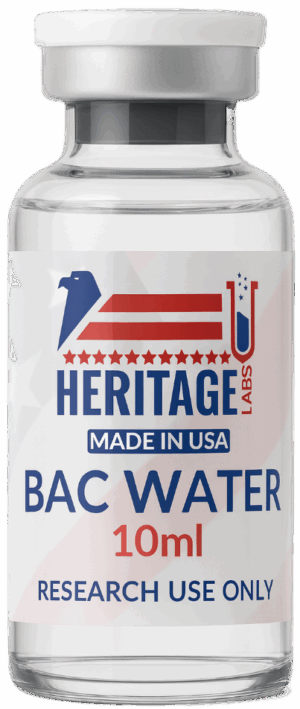
Reconstitution Solution is the appropriate solvent for the majority of research peptides. However, some peptides are poorly soluble at neutral pH and require a mildly acidic solvent such as 0.6% acetic acid water. If a peptide forms a cloudy suspension or visible precipitate when mixed with reconstitution solution, consult the product documentation for solvent recommendations. Heritage Labs also carries acetic acid water for peptides that require acidic reconstitution conditions. For researchers who work with multiple compounds simultaneously or need larger solvent volumes, Heritage Labs offers a 10 mL reconstitution solution vial. For a complete guide to reconstitution solvents, handling protocols, and storage timelines, see the Heritage Labs Reconstitution Solution Guide and Reconstitution Guide.

FDA Disclaimer. All products are for research use only (RUO) as defined by the FDA — not for diagnostic, human, or veterinary use. These products have not been evaluated and have not been approved by the U.S. Food and Drug Administration and are not intended to diagnose, treat, cure, or prevent any disease.
Heritage Labs is a chemical supplier providing products strictly for laboratory research, analytical, and in-vitro purposes; it is not a compounding pharmacy or compounding facility under Section 503A, nor an outsourcing facility under Section 503B, of the Federal Food, Drug, and Cosmetic Act.