
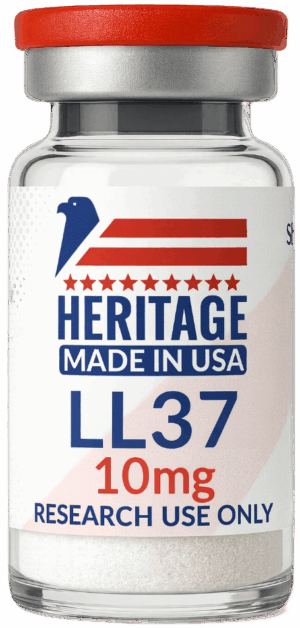
LL-37 5mg
Human cathelicidin antimicrobial peptide — 37 amino acids from the hCAP-18 C-terminal domain The only cathelicidin-derived antimicrobial peptide identified in humans Research-grade · CAS 154947-66-7 For in vitro antimicrobial and innate immunity research only
For laboratory research use only. Not for human or veterinary consumption. SKU 375.
Product details.
Specifications
| Amino Acids | 37 |
| Parent Protein | hCAP-18 |
| Molecular Formula | C205H340N60O53 |
| Molecular Weight | 4493.33 g/mol |
| CAS Number | 154947-66-7 |
| Structure | Amphipathic alpha-helix |
| Form | Lyophilized powder |
| Quantity | 5mg per vial |
Mechanism of action
The amphipathic alpha-helical structure is the key. One face of the helix is hydrophobic, the other hydrophilic. This lets LL-37 interact with the negatively charged phospholipids in bacterial membranes, leading to permeabilization. MIC studies have characterized activity against panels of gram-positive and gram-negative organisms. But the antimicrobial activity is only part of the story.
Beyond killing bacteria
Published research documents LL-37 as a chemotactic agent that recruits neutrophils, monocytes, and T cells through FPRL1 receptor interactions. It modulates TLR4 inflammatory signaling. It participates in VEGF-mediated angiogenesis and EGFR transactivation in epithelial models. And at sub-MIC concentrations, it disrupts bacterial biofilms by interfering with matrix components and quorum sensing.
Frequently paired with
- BPC-157 5mg — Immune and tissue recovery research.
Quality and testing
Third-party tested by an independent lab for identity, density and purity. Certificates of analysis are published on the product page and in the COA portal. Manufactured to research-grade standards and shipped in protective packaging.
Storage
- Lyophilized: -20°C
- Reconstituted: 2-8°C, use within 30 days
For laboratory research use only. Not for human or veterinary use.

FDA Disclaimer. All products are for research use only (RUO) as defined by the FDA — not for diagnostic, human, or veterinary use. These products have not been evaluated and have not been approved by the U.S. Food and Drug Administration and are not intended to diagnose, treat, cure, or prevent any disease.
Heritage Labs is a chemical supplier providing products strictly for laboratory research, analytical, and in-vitro purposes; it is not a compounding pharmacy or compounding facility under Section 503A, nor an outsourcing facility under Section 503B, of the Federal Food, Drug, and Cosmetic Act.